I found these articles to be incredibly
interesting to read and they both got me thinking about the flaws of our health
care system and how we can strive to make it better equipped to help people,
which is its intended purpose. The article Funding
healthy society helps cure health care makes me wonder how many cases that
are brought into hospitals and clinics could be prevented by simple
interventions such as eating healthier, or eating enough in this specific
child’s case. It reminds us that we must focus on the root of the problem
instead of just focusing on the problem itself. Some physicians and medical
professionals have developed tunnel vision when it comes to the treatment of
their patients. Instead of focusing on the patient as a whole they focus solely
on the symptoms. As health care providers it is important to remember that
there is a face that goes along with these symptoms. The patient’s case is a
multifaceted system and in order to provide the best care we must delve into
all possible causes of the issue, which may not be exclusively medical.
The second
article also discussed problems with health care and associated programs
attempting to make a difference. Health Leads is a program of trained college
students who provide patients with connections to necessary resources such as
food banks. According to the article they serve roughly 9,300 patients and
families and the program is quickly gaining recognition and momentum. I think
this is an awesome project for college students and a great way for us to help
make a difference in our world. Another program discussed in the article was
Medical-Legal partnership for children, which brings lawyers into the hospital
setting to assist patients with situations where physicians are unable.
Examples include unsafe living conditions or domestic violence. This is a
beneficial program because it allows people to receive the most appropriate
care and assistance. For example if a physician is consistently seeing a
patient with problems associated with domestic violence the physician can help
to cure the patient of their symptoms, but we are not solving the ultimate
issue at hand. In this case a lawyer would be able to fix the problem at the source
instead of just treating the associated symptoms.
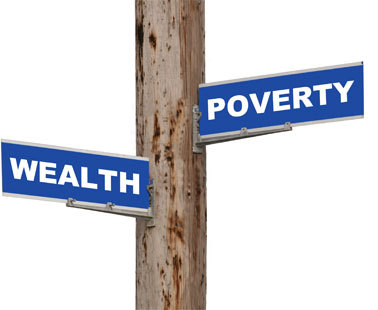
 Poverty has a
huge effect on the health of an individual or a family. If people are unable to
afford enough food to meet adequate nutritional requirements they risk becoming
malnourished. According to the U.S. Nation Library of Medicine malnutrition can
cause mental and physical disabilities, illness and death (2011). A non-medical
problem associated with hunger and lack of food is decreased focus and
attention. Children who go to school hungry have a harder time focusing on the
task at hand than a child who ate a nutritious breakfast. Several schools have
created programs to assist children in this situation by offering free or
reduced-cost meals. Adults who go to work hungry may face the same issues. It
is hard to be focused and alert when all you can think about is your growling
stomach. It is obvious that lack of focus will lead to poor performance in
schools and at the work place. Without proper education it is hard to get a
well paying job, and poor performance at work may lead to termination. Both of
these situations propel the line of poverty that already exists for these individuals.
Poverty has a
huge effect on the health of an individual or a family. If people are unable to
afford enough food to meet adequate nutritional requirements they risk becoming
malnourished. According to the U.S. Nation Library of Medicine malnutrition can
cause mental and physical disabilities, illness and death (2011). A non-medical
problem associated with hunger and lack of food is decreased focus and
attention. Children who go to school hungry have a harder time focusing on the
task at hand than a child who ate a nutritious breakfast. Several schools have
created programs to assist children in this situation by offering free or
reduced-cost meals. Adults who go to work hungry may face the same issues. It
is hard to be focused and alert when all you can think about is your growling
stomach. It is obvious that lack of focus will lead to poor performance in
schools and at the work place. Without proper education it is hard to get a
well paying job, and poor performance at work may lead to termination. Both of
these situations propel the line of poverty that already exists for these individuals.
Families and
individuals living in poverty are often times not living at an optimum health
status and this can hurt the community as a whole. Exposure to unsafe living
conditions, inadequate nutrition and a variety of stressors takes a toll on the
health status of people. With limited money and resources they may not be able
to seek adequate health care and therefore will remain ill. Disease and illness
can travel quickly in run down communities with poor sanitation and limited
health precautions. Community-wide pneumonia, TB and influenza are all possible
outcomes. Another way that poverty affects a community is an increase in crime.
According to Blake Taylor from economics.fundametalfinance.com there are several
reasons why areas of poverty experience more crime. The stress of poverty may
lead people to participate in crime and other violent acts. Also, people in
poverty may see stealing as the only way to obtain material goods (2006). Poverty
does not only affect individuals and families, it is a community wide issue
that creates a multitude of problems.
 Specific
interventions that could be done to address and help alleviate the problems
associated with poverty are outreach and health teaching. Outreach “locates
populations of interest at risk and provides information about the nature of
the concern, what can be done about it and how services can be obtained” (Nies
& McEwen, 2011, p. 15). This could be achieved by informing people of resources
in their community that offer needed assistance. Examples include food banks,
free clinics, free immunization drives, family planning clinics and additional
resources. Many people are unaware that these types of programs exist and it is
our job as nurses to inform our patients of these opportunities. Another
intervention would be health teaching, which “communicates facts, ideas, and
skills that change knowledge, attitudes, values, beliefs, behaviors, and
practices of the individuals, families, systems, and or/communities” (Nies
& McEwen, 2011, p. 15). As nurses we establish a trusting relationship with
our patients and we have the opportunity to educate them about ways to live a
healthier life. We can focus on the benefits of healthy eating, exercise and
techniques to cope with stress to promote the health of our patients. Leading a
healthy lifestyle may prevent costly and time-consuming visits to health
facilities, which may be of limited access to those living in poverty. Eating a
well balanced diet, getting enough exercise and maintaining an appropriate body
weight helps to greatly reduce the risk of many diseases and health
complications. By teaching patients prophylactic steps to avoid health
complications we can attack the problem at the source and save them a lot of
time, money and stress.
Specific
interventions that could be done to address and help alleviate the problems
associated with poverty are outreach and health teaching. Outreach “locates
populations of interest at risk and provides information about the nature of
the concern, what can be done about it and how services can be obtained” (Nies
& McEwen, 2011, p. 15). This could be achieved by informing people of resources
in their community that offer needed assistance. Examples include food banks,
free clinics, free immunization drives, family planning clinics and additional
resources. Many people are unaware that these types of programs exist and it is
our job as nurses to inform our patients of these opportunities. Another
intervention would be health teaching, which “communicates facts, ideas, and
skills that change knowledge, attitudes, values, beliefs, behaviors, and
practices of the individuals, families, systems, and or/communities” (Nies
& McEwen, 2011, p. 15). As nurses we establish a trusting relationship with
our patients and we have the opportunity to educate them about ways to live a
healthier life. We can focus on the benefits of healthy eating, exercise and
techniques to cope with stress to promote the health of our patients. Leading a
healthy lifestyle may prevent costly and time-consuming visits to health
facilities, which may be of limited access to those living in poverty. Eating a
well balanced diet, getting enough exercise and maintaining an appropriate body
weight helps to greatly reduce the risk of many diseases and health
complications. By teaching patients prophylactic steps to avoid health
complications we can attack the problem at the source and save them a lot of
time, money and stress.
References
Nies, M.A. &
McEwen, M. (2011). Community/public health nursing: Promotion the health of
populations (5th ed.)
St. Louis, MO: Saunders/Elsevier.
Taylor, B. (2006). Poverty and crime. Retrieved from
http://economics.fundamentalfinance.com/povertycrime.php
Zieve, D., & Eltz, D., R. (2011). Malnutrition. Retrieved
from
http://www.nlm.nih.gov/medlineplus/ency/article/000404.htm
 The above link will take you to the main home page for the
Asthma Health Center, and from there, you can explore many different routes
depending on the information you are searching for. I chose the WebMD website because it is has
an award-winning senior staff and editorial team. WebMD is widely known for their in-depth,
credible information and news. It is written
and edited by medical doctors that have been or are continuing practice.
The above link will take you to the main home page for the
Asthma Health Center, and from there, you can explore many different routes
depending on the information you are searching for. I chose the WebMD website because it is has
an award-winning senior staff and editorial team. WebMD is widely known for their in-depth,
credible information and news. It is written
and edited by medical doctors that have been or are continuing practice.